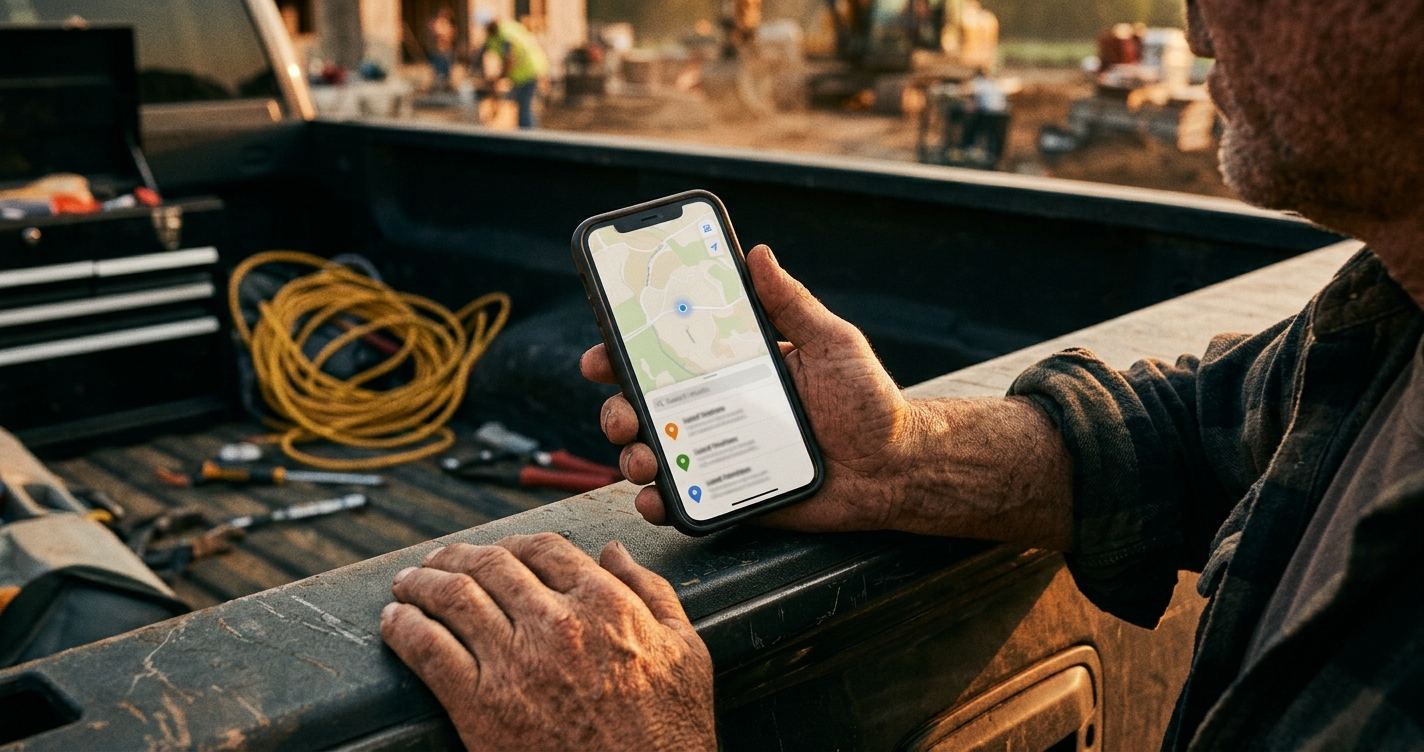
You post a picture from a job site in Mid-City on a Thursday evening. Nice light, decent driveway, van in shot. A hundred and something likes, a few comments, somebody's aunt says looks great. Feels good.
The following week you post the actual thing — you have openings, here is what you do, here is the number. Three likes. One of them is your cousin.
Everybody I talk to who is trying to make Facebook groups work has some version of this story, and almost all of them draw the same conclusion from it, which is that they must be posting wrong. So they try posting at a different time, or with a better photo, or they read something that says provide value first, so they spend two months answering other people's questions before mentioning what they do. Usually it does not change much.
I want to make the case that the posting was never the problem.
A feed is an attention market. Your work is not bought with attention.
Everything in a group feed is competing for the same thing: whether a thumb keeps moving. A sunset, a lost dog, an argument about potholes, and your gutter cleaning offer are all in that same auction, and three of those four are more interesting than the fourth to a person who is not currently thinking about gutters.
That is not you being bad at this. That is the feed working exactly as designed. Nobody opens Facebook to hire a tradesman, the same way nobody drives to the shops hoping to be sold a new roof on the way.
Nobody opens Facebook to hire a tradesman. They open a search bar for that, and usually only once.
Here is the thing that actually decides whether a channel produces work: not how many people it reaches, but what those people were doing when it reached them. And the people scrolling a neighbourhood group at nine at night were doing nothing in particular. Their water heater is fine. Their fence is fine. There is no job to win, at any price, from someone whose thing is not currently broken.
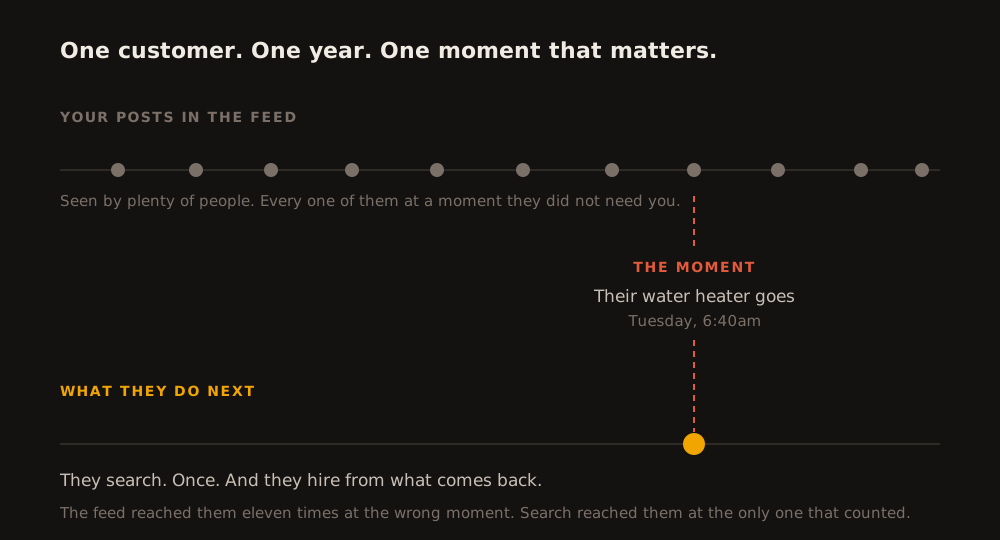
The moment you are actually competing for
For almost every trade, work gets bought in a narrow window that opens without warning. A pipe goes. A breaker keeps tripping. A landlord gives somebody two weeks. In that window the person does one thing: they search, they look at what comes back, and they call one or two names off the top.
That window might open once every four years for a given household. You cannot be in it by being memorable eleven months earlier. You can only be in it by being present when it opens — which means being in the results, with enough recent proof next to your name that you are one of the two they call rather than one of the eight they scroll past.
This is the honest reason group posting feels like shouting. You are advertising to a room where roughly nobody has the need right now, and the handful who do have the need are not in the feed — they are already in the search bar, looking at somebody else.
What groups are genuinely good at
I do not think you should quit the groups, and I want to be clear about why, because “stop doing social media” is bad advice and also not what I am saying.
Groups are good at exactly one thing, and it is worth having: being recognised. The neighbourhood groups for your part of town — Mid-City, Metairie, Chalmette, the parish-wide recommendation threads, Nextdoor for your own blocks — are where that recognition builds up. When somebody finally does post can anyone recommend a good electrician, the names that get typed into that comment thread are the names people already half-know. Months of being visibly present in a group is what turns you into one of those names.
That is real, and it is worth the ten minutes a week. What it is not is a channel you can lean on. You cannot make somebody's fence fall over this month because you need the work this month. Recognition raises your odds when a recommendation thread happens; it does not cause one to happen.
So the mistake is not being in groups. The mistake is having groups be the only thing, and then concluding from three likes that marketing does not work for your trade.
Where the time is better spent
If you want the version of this that takes an afternoon and then keeps working, it is your Google Business Profile, and it is free. That listing is the thing people actually see in the window I described — the map results, the star rating, the photos, the reviews that mention the same job they are about to book.
Most of the trades I look at in New Orleans have one, technically. It was claimed once, the hours were never confirmed, there are two photos from 2023, and the last review is old enough that Google reads the whole thing as a business that may not be operating any more. I wrote about that in detail in why you are not showing up on Google when your profile looks abandoned, because it is by far the most common fixable gap I run into.
The comparison I would make is this. A group post is a conversation you have to keep starting. A profile with real reviews on it is a thing that sits in the results answering for you at 6:40 on a Tuesday morning while you are still asleep. One of those is work you redo every week. The other is work you do once and maintain.
And if your business today runs mostly on people already knowing you — which is true of most trades that end up leaning on groups — the underlying problem is the one I wrote about in what happens when word of mouth slows down. Groups are word of mouth with a bigger room. They have the same ceiling.
If you want the profile side handled properly rather than guessed at, that is what we do on Google Business Profile optimisation.