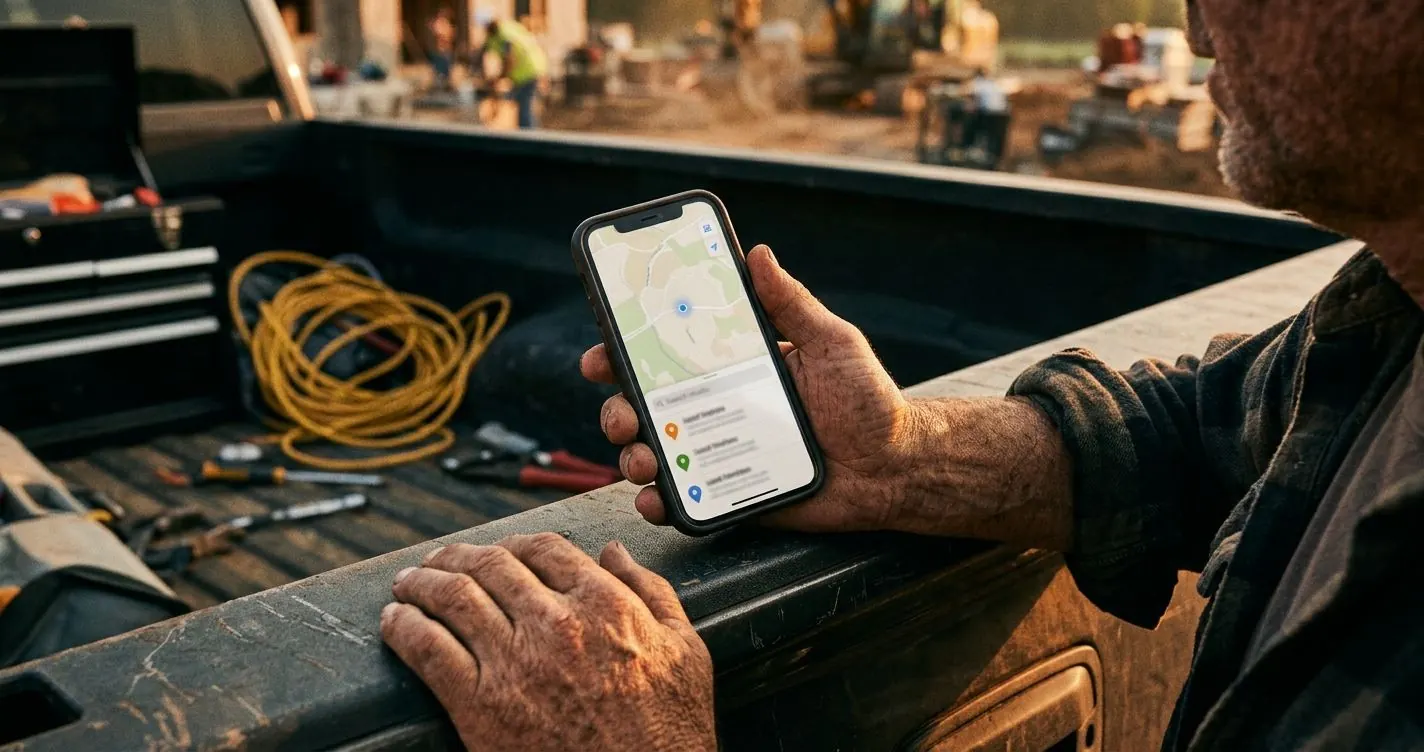
I've spent the last few months calling home service businesses around New Orleans. Electricians, plumbers, roofers, lawn crews, pressure washing guys. Most days I make more calls than I'd like to admit, and I've learned something about these businesses that has almost nothing to do with why I was calling them in the first place.
Most of them don't answer.
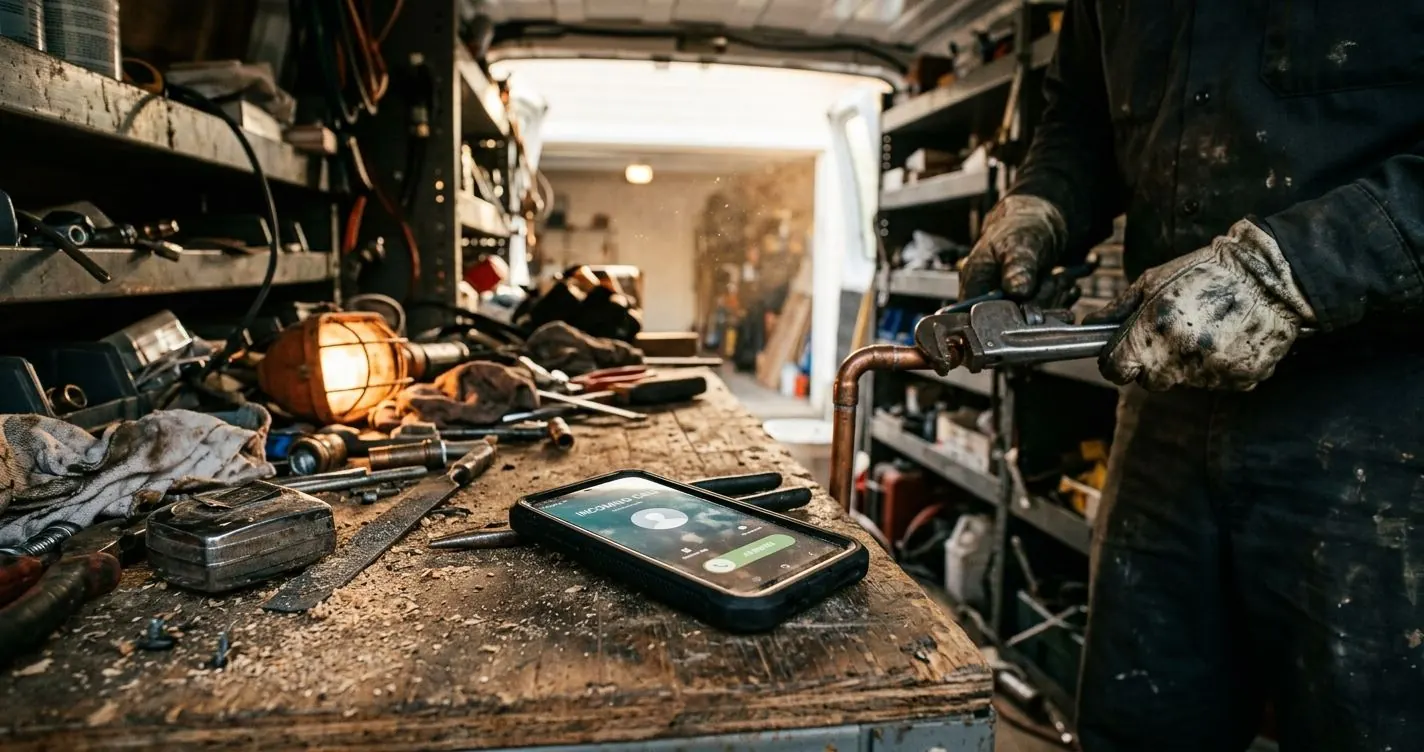
I want to be careful here, because that's not a criticism and it isn't laziness. It's the opposite. The guys who don't pick up are usually the ones who are busiest. They're under a sink. They're on a roof in July. They're in somebody's attic with a flashlight in their teeth. Answering the phone at that exact moment isn't an option, and honestly it shouldn't be.
But here's the part that bothers me, and it's the reason I'm writing this.
The problem isn't the missed call. It's that you never find out.
When somebody calls your business and you can't pick up, one of two things happens. Either they leave a voicemail and wait, or they hang up and call the next name on the list.
Almost nobody waits.
Think about when people actually call a contractor. Their water heater just went. There's a branch on the roof. The AC quit and it's ninety four degrees. They're not shopping around and comparing craftsmanship. They've got a problem and they want somebody to say "I can be there Thursday." So they Google it, they call the first number, and if that doesn't work out they call the second one. Takes them nine seconds.
Now here's the thing. That person never becomes a story you hear. They don't email you to complain. They don't leave a bad review, because they were never a customer. All that happens is your phone shows a missed call from a number you don't recognize, and you glance at it later and figure it was probably spam, or somebody who'll try again.
Most of them don't try again.
Every other problem in a service business announces itself. Losing a customer at the front door is completely silent.
That's what makes this so easy to ignore. A bad job gets you a phone call. A late crew gets you a text. But you could be losing a customer a week for two years, and the only symptom is a vague sense that things are slower than they should be.
Two people who are never free at the same time
There's a scheduling problem underneath all of this that I don't think gets talked about enough.
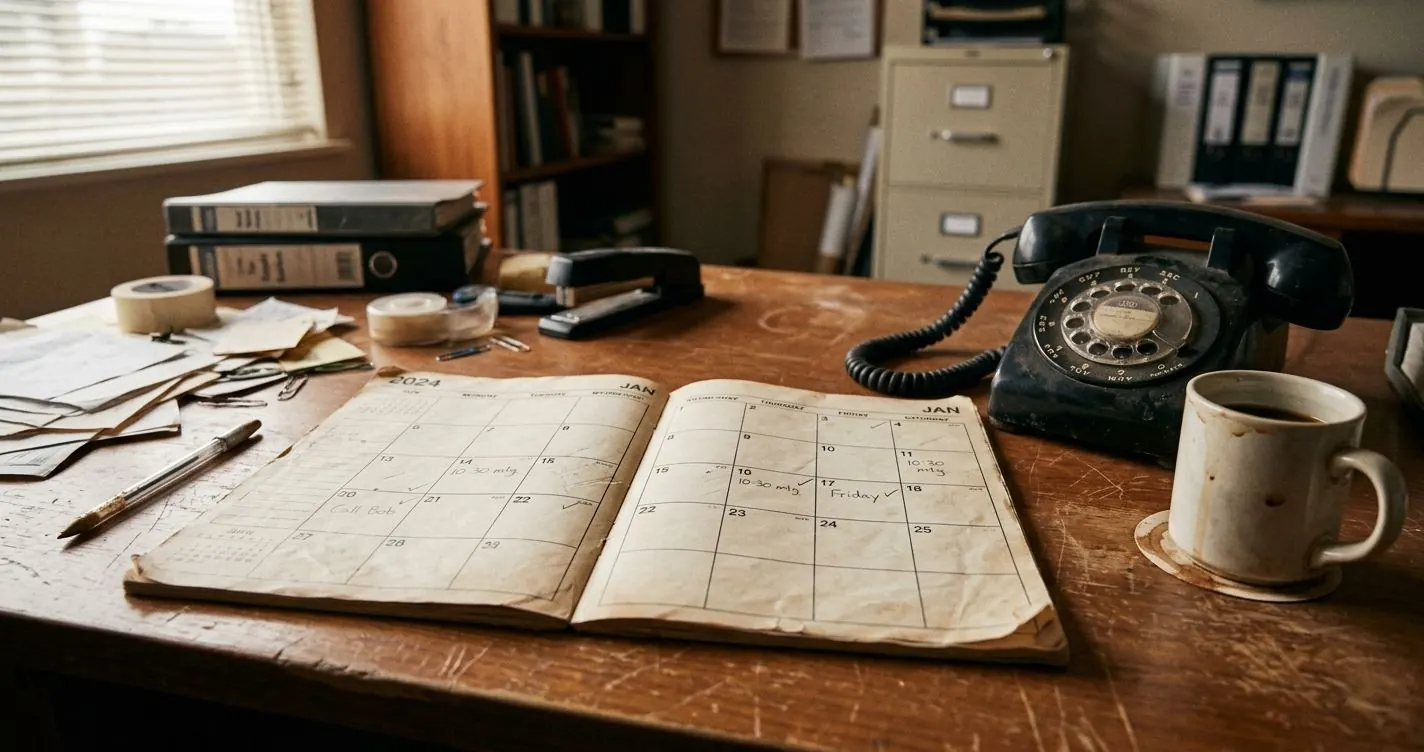
A phone call needs both people available at the same moment. That's the whole deal. You have to be free and they have to be free, at the same time, or it doesn't happen.
You're a contractor. Your free moments are early morning, lunch if you get one, and after six. Your customer works too. Their free moments are their lunch break, or nine at night after the kids are down and they finally have a second to deal with the leak they noticed on Saturday.
Those windows barely overlap. And when the only way to do business with you requires them to overlap, you're losing everybody whose schedule doesn't happen to line up with yours. Which is most people.
The customer who calls you at 9pm isn't being unreasonable. That's genuinely the first moment they had. And if the only thing waiting for them at 9pm is a voicemail beep, you've lost that job to whoever had a "request a quote" button.
"Answer the phone more" is not the fix
I want to be straight about this because I think it's where a lot of advice goes wrong.
The obvious answer is to answer more calls. Get a headset. Check your phone between jobs. Hire somebody to sit by the phone. And look, if you can afford an office person, that solves it. Most small crews can't, and honestly the ones who can are usually past the point where this article is about them.
For everybody else, telling a guy who's wiring a panel to answer his phone more isn't advice, it's just describing the problem back to him. You can't be in an attic and on the phone. That's not a discipline issue, it's physics.
So the fix isn't answering more. The fix is making sure that when you can't answer, the customer still has somewhere to go.
What to put next to the phone number
There are a few versions of this and they're not equally hard.
The simplest one is a short form on your website. Name, phone, what they need, and that's it. Four fields, not fourteen. It has to work on a phone, because that's where they are. And somebody has to actually get the submission, which sounds obvious but I've seen plenty of sites where the form goes nowhere and the owner has no idea.
Better than that is an automatic text back. When a call comes in and doesn't get answered, the caller gets a text within a few seconds. Something like "Sorry we missed you, this is Mike at such and such plumbing, what's going on?" And then they can just text you what they need, and you answer it when you climb down off the ladder. The customer feels handled immediately, which is the whole game, and you didn't have to stop working.
That one matters more than people realize, because a text sets a completely different expectation than a voicemail. A voicemail says "wait around and hope." A text that arrives in eight seconds says "I've got you." Same delay on your end. Totally different feeling on theirs.
The version that takes the most setup is real online booking, where they pick a window and it lands on your calendar. That's great if your jobs are predictable enough to slot into time blocks. A lot of trade work isn't, and that's fine. Don't force it.
The objection I hear most
"My customers are older. They want to talk to a real person."
Some of them do, and those people will keep calling you, and nothing about this takes that away. Adding a second door doesn't close the first one.
But I'd gently push back on the assumption. The person who texts you at 9pm about a leak isn't necessarily young. They're just somebody whose day didn't have a gap in it. And in my experience the people most likely to give up after one unanswered call aren't the patient ones who'll leave a voicemail. They're the ones with money and no time, which is exactly who you want.
The other objection is that a form fills up with people who aren't serious. That's true, you'll get some. But weigh it honestly. A junk form submission costs you about four seconds to read and delete. A real customer who called once, got nothing, and hired the next guy costs you an entire job, and you'll never even know it happened.
What I'd do this week
Call your own business number right now, from a different phone, and don't answer it. Then sit with what the customer experiences. How many rings before something happens. What the voicemail greeting says, if there is one. Whether the mailbox is even set up, or whether it's full. I've called businesses where the mailbox was full, which means every single caller who doesn't try twice is simply gone.
Then look at your website, if you've got one, and ask whether there's anything on it a person could do at 9pm besides read.
That's the whole test. If the answer is "they could call me," then right now the only customers you're getting are the ones whose schedule happened to line up with yours. There's a second group out there who tried, and you never heard about them.
I'm putting together a study on exactly this. Fifty home service businesses across New Orleans, calling each one during business hours, tracking how many pick up, how many ever call back, and how long it takes. When it's finished I'll publish the whole thing here, the numbers and how I got them, so you can see where you'd land.
Missed calls are only half of getting found. The other half happens before the phone ever rings: I wrote about that in why you're not showing up on Google in the first place.